Wednesday, December 19, 2012

MEDITATION RETREAT 5-6TH JAN 2013, PUNE

SUCCESSFUL RETREAT!
Group for the Outreach of Omniscient Dharma (G.O.O.D) Ref: MTTS-2/MED RET


Dear Friend, In November 2012, G.O.O.D started the “Mind Transformation Master Series" with the intent of bringing Nalanda wisdom,
traditions and practice into our work/life. In continuation, we now invite you to the 2-day Meditation Retreat led by Khenpo Sonam Tsewang.


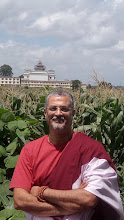
It is indeed a very rare opportunity to learn and practice Tibetan Buddhist meditation methods with someone like Khenpo Sonam (in pic), a highly learned and accomplished Professor of Buddhism. “The gift of learning to meditate is the greatest gift you can give yourself in this life. It transcends the dogma of all religions yet is the essence of religions” - Sogyal Rinpoche.


If you would like to attend, please email for details on Lamagirish@gmail.com. There are limited places (30seats), so you are requested to confirm as soon as possible. The retreat will be held in Aundh.


PROGRAM BRIEF: Timings: The session timings will be as under:- 5th Jan: 10am to 12.30pm (1st session) and 2pm to 5pm (2nd session) 6th Jan: 10am to 1pm (one session) Donation: Suggested donation is Rs. 400/- per participant. Includes complimentary ‘khata’ (silk scarf) offering for Khenpo. (Topics: Logic of Compasssion, Bodhichitta & Nature of Negative Emotions. Alongwith teachings we will practice 'Shamatha' or Calm Abiding meditation.)
Venue: Sakal Charity Trust Hall, Sakal Nagar, Baner Rd., AUNDH.


Prior registration is a must for participation! NO WALK IN'S PLEASE. Be good. Team G.O.O.D.

Friday, December 7, 2012

Birthday Celebration– To Do Or Not To Do Is The Question

A few days have passed since it’s been fifty years of my existence in this life. Prior to the D-day, my family was quite excited, which seemed normal, as some kind of significance is usually attached to this number. And so plans were offered and i was made to choose guest list and stuff like that. It was when i flatly refused any kind of celebration, that hell broke loose. Almost everyone at home came for my jugular! All sorts of ‘kind’ words were chucked at me – most of them not quite polite to reproduce here - but i endured through it all, until their storms passed. And then i was asked to explain my stand. “Ah! How i wish this option was given before brewing up the storm”, i thought to myself silently.


And this is what i had to offer to them. It is for you, dear reader, to contemplate upon and make a choice for yourself. This is the view of good Dharma practitioners. Beginning with the process of birth, we must indeed be grateful to our parents to have this precious human life bestowed upon us. It gives us great opportunity to whip up a spiritual trajectory unknown to any other life form. However, if we contemplate upon the process of child birth itself and the great suffering the child and mother have to undergo, we will realize that celebrating the day of birth would be like celebrating intense suffering. And this is the first of the four noble truths that Siddhartha realized. The suffering of birth. While Siddhartha examined the Four Truths in the context of ultimate liberation we are attempting to understand it here in the relative context of this life.


Moving into our growing years, all of us have accumulated all kinds of karma on account of our actions of body, speech, thoughts and emotions driven by various intensities of aversion and attraction . These include some good and virtuous ones and others bad and non-virtuous ones. Knowingly or unknowingly we have done it and even if we don’t remember each one of them, the fact that we have done them cannot be denied. The good deeds, if they were not contaminated by ambition, pride or competition would certainly accrue to the credit side of our ‘balance sheet’ if the merit accumulated from them were dedicated to others and not retained with us. The bad deeds will surely rest in the debit side and we must simply endure them unless we can find a way to purify, heal and transform them through certain practices to somewhat lessen their effect. So, it would be wise in attempting to understand this. If we have been engaged in realizing this and actually doing something about it, that’s fine otherwise celebrating our birthday would be like celebrating accumulation of years of misdeeds on others and ourselves and the misery they will bring on us in this life and rebirths ahead.


Some may argue that by celebrating our birthday we celebrate completion of another year of our life. This is right but if we think further and thin slice the year and our good fortune of being alive, we could bring in down to one day or just one breath. So we can really celebrate every day or every breath of ours! There is a saying in Tibetan Buddhist teachings which goes like this: “Our next day or our next life which will come first we can never say.”


For a real practitioner s/he is always trying to be free of every kind of desire or attachment. So, is there really much wisdom in staying attached to the day or year of our birth which occurred so many years ago and from which we are moving away with every passing day? If we think so, the question then beckons us is ‘Are we really succeeding in our practice?’


Lastly, for any person, whether or not a practitioner, realization at the time of death is most powerful. It is in these final moments of life that the true nature of our mind is revealed to us. What we really are and what we have instead been all our life comes across to us in stark clarity. This is unavoidable and no matter how we meet our end these images flash across our mind before the perfectly pristine nature of mind is revealed to us. It is the difference in practice that enables us to recognize it or miss it, thereby determining the quality of our re-birth. By that comparison, there is no realization in the infant at birth. It is precisely for this reason passing away (parinirvana) of realized masters is celebrated with prayers, donations and offerings rather than their date of birth.


Therefore, we can easily see the futility of celebrating our birthday a manner in which it is celebrated conventionally. And what i find most amusing of such celebrations is the western concept of blowing out candles! Transcending all religions, paths and traditions, it is widely accepted that lighting a candle is symbolic of dispelling darkness of ignorance in our minds and ushering in the light of wisdom. It may also be to invoke the element of fire which represents the mind's quality of clarity, fire is that element which supports the thermal system of our body and is that element also which controls the sense of sight. But, what can the blowing out of candles be symbolic of?


However, if we want to celebrate our birthday meaningfully, it would be wise to do so by doing community work, donating some money, food or clothes or any act of generosity towards those who are deprived of it and not as fortunate as we have been; and then sealing the action by dedicating the merit so accumulated for the wellness of the recipients of our generous gesture or our near and dear ones or to all sentient beings. The amount we donate is really irrelevant but what is extremely relevant is the heart’s pure intent and uncontaminated motivation of the mind behind it.


Have a happy and meaningful birthday!

Saturday, November 17, 2012

SAMATHA AND VIPASANNA: Progressing with Caution

Speaking Tree, Sun, 09.12.2012


In my journey as life coach using Siddhartha’s Way of Awakening, students often ask me such questions: ‘how does one meditate?’ and ‘what is vipasanna meditation?’ While this column is not dedicated to describing methods of meditation, it is to bring out fundamental differences in the two most commonly used approaches to meditation and the wise manner in which we need to use them in order to derive benefit from them.


Shamatha and Vipasanna.


The Tibetan word for Shamatha, is ‘shyine’ or calm abiding. Essentially this practice begins with turning the mind inward and trying to understand what really is going on inside it. Recognizing the mind’s tendency to distraction; that the mind is prone to getting disturbed and unsettled with arising thoughts and emotions; that there is some kind of mental chatter is indeed the first step to meditation. As the practitioner perseveres further, thoughts settle down and the mind becomes calm with distractions reducing to some extent. Initially it is important to consciously keep the mind alert without grasping at arising thoughts yet not drift into a dull, dark and slothful state. We slowly begin to sense the mind resting in alert and spacious calm. Some kind of aware and quiet collectedness envelopes us. The mind rests in calm abiding or shamatha. Shamatha meditation is used as an antidote to distraction. Once the mind reaches this state, self-grasping and self-clinging dissolve. Now the mind is ready to explore further without taking the support of the spacious calmness it has reached. It is said that Shamatha is the calm ocean of the mind in which the investigative fish of Vipasanna swims.


In Tibetan the word ‘lhaktong’ is used to describe Vipasanna. It simply means insight or investigative meditation, the outcome of which is wisdom generation. Only when a practitioner is fully skilled in resting her/his mind in calm abiding is it possible for her/him to begin probing deeper through investigation. Just as trying to swim in rough waters is not easy, so also attempting to undertake enquiry when the mind is in a distracted state will yield unsatisfactory results. Naturally questions that arise are: How does one undertake investigation? What should one investigate on? Tibetan Buddhist masters have described three methods one can rely on to generate wisdom. Widely known as the Three Wisdom Tools, they are: Hearing and listening (or reading) to the teachings, contemplating on these teachings to understand their logic (which includes mentally debating them) and finally meditating upon them, in order to make the realization achieved through contemplation into one’s continuous mind stream. One can investigate on a number of issues some of which are: causes and effects of our actions and emotions on us and surroundings, ever presence of impermanence (anicha), non-self (anatta) and suffering (dukkha), inter-dependent nature of all life forms and all phenomena, advantages and responsibilities of our human life over other life forms, logic of compassion, harmful effects of limitless desire and insatiable ego, antidotes to negative emotions and their benefit and so on. Infact, the pristine state of alert and spacious calm can be used at times to investigate and find solutions to problems at work and home too!


Using these two techniques of meditation, a practitioner can progress well in understanding his/her mind better and in the process gain wisdom. Both approaches bring immense benefit when used appropriately.


It is very important to note therefore that every practitioner should first begin with Shamatha meditation and upon stabilizing it, progress towards Vipasanna can be made. Such an approach will result in bringing about enduring and lasting benefit.
 

Saturday, November 10, 2012

A G.O.O.D Feeling!

Last three days saw Khenpo Sonam Tsewang of Namdroling Monastery visit Pune and share the light of Buddha's teachings with few interested Punekars. It was an amazing experience to have an enlightened Tibetan Buddhist Master stay with us and give tips to the family on day to day life and living and how we can effortlessly improve the 'peace quotient' of our private life. Some press/media links here.
http://www.punemirror.in/article/2/201211082012110808272990024f9c971/In-pursuit-of-happiness.html http://www.indianexpress.com/news/a-spiritual-sojourn/1028023/1


G.O.O.D, which stands for Group for the Outreach of Omniscient Dharma, as some of you may know is a group that has been convened by yours truly, solely for the purpose of bringing the wisdom of Siddhartha and great Nalanda masters to Puneites on a sustainable yet 'no profit all benefit' format with the purest and most uncontaminated intention and motivation. This is not a business venture! :) We are hoping to keep the Master Teaching Series sustainable through corporate an individual donors/sponsors.


A full time Dharma teaching centre is the objective, given the rising interest amongst Punekars over the past two years, in the relevance and logic of Buddhism in our approach to and better understanding of life & living, death & dying.


That's all for now. Greetings for the festive season. Lv, cheers and prayers to you and your lovely families, May all of us continue to create causes for peace.

Wednesday, October 24, 2012

MIND TRANSFORMATION MASTER SERIES

A few of us in Pune have come together to form a group to hold a series of teachings based on Buddhist science and philosophy. Buddhist Masters will be invited from renowned monasteries and institutes across India to impart teachings by sharing the light of Sakyamuni's Dharma.


The group calls itself Group for the Outreach of Omniscient Dharma (G.O.O.D). NOV 6-7 is the first of this series by Khenpo Sonam Tsewang of Namdroling Monastery, Bylakuppe, S.India.


ALL ARE INVITED. Invitation with details appended. Please do attend. Convenors: Girish Deshpande & Ashwini Khare Dasgupta

Monday, October 22, 2012

PEACE V/S HAPPINESS

The other day a friend of mine and i were contemplating the larger meaning of life and living. He also wanted to know more of the solitary cave retreat in the Himalayas i was just back from. As the conversation was coming to an end, he said to me “So basically under any given circumstances we have to know how to be happy, isn’t it?” As i began to see a steady stream of customers entering his coffee shop, i could have just nodded in the affirmative, made him feel happy about it and melted away. But something inside me stirred and i went on to explain it thus to him.


It is commonly projected in spiritual teachings that the objective in this life is to be happy and keep other beings around us happy. Well, in Buddhist teachings the approach is a bit different.


Take any two situations in your own life. One that has been a pleasant one and the other which has caused you pain and unpleasantness. The reactions to both these situations by a siddha (accomplished one) and an ordinary being will be different.


While the ordinary being will sway between the extremities of being happy in one situation and sad in the other one that has been unpleasant, the accomplished one will be at peace in both the situations. Herein lies the fundamental difference. While peace is a constant state of being, having almost no contrasting opposite, happiness is subjected to a contrasting dual state viz. sadness. While the nature of peace is unchanging, the nature of happiness is subject to forces prone to change hence making it a temporary or transient state. Happiness also has the great possibility of being contaminated by desire, not so is the case with peace. To understand the difference better, let us take an example of a mother who has just lost her child. It would be foolhardy to expect the traumatized mother to be ‘happy’ in a heart—rending moment such as this, however accomplished a yogin she may be! However, if the same woman had even the basic understanding of the teachings on impermanence, she would certainly be at ‘peace’ with the given extreme situation. And this approach can be applied in several circumstances with us in day to day situations.


Sakyamuni’s intent was never to be happy himself nor did he lead people towards the false assurance of keeping them happy. His path does not lead to happiness either. It leads to nirvana, which is peace. A state free from the duality of being ‘happy’ and/or ‘unhappy’. This state is never ever to be confused with indifference. It is to be in total awareness of the situation and being at peace with it. This is very important to understand. Indifference can lead to a whole set of negative karma by itself and therefore must be abandoned sooner than later.


In an accomplished practitioner the very bedrock of being is peace, irrespective of the situation. There is no doubt that delusions of afflicted emotions arise in siddha’s just as in ordinary beings. However, the difference is how each of them reacts to them. While an ordinary being will immediately have a ‘like’ or ‘dislike’ reaction resulting in the corresponding negative karma arising from attachment or aversion; a siddha sees everything arising in its natural state without grasping entering his/her perception.


With relentless practice when these subtleties are realized, a deep sense of contentment arises within us. The mind becomes clear, vast and pure as it has been from the very beginning. It recognizes the alternating and unending dance enacted by samsara and nirvana. It becomes quite sky-like; not disappointed with the clouds nor excited over a rainbow.


Therefore, the words of ‘peace’ and ‘happiness’ cannot and should not be used loosely like synonyms as people – including few spiritual teachers of some faiths - are generally prone to using them. They must be used after their meaning is fully and deeply understood through the dedicated practices of contemplation and meditation. Let us therefore continue to create causes for peace...and happiness. :)

Friday, October 19, 2012

My Solitary Cave Retreat, Sikkim

October 2012 saw me retreat to the Himalayas for a fortnight of quiet contemplative and meditative break. I believe such solitary breaks to be very crucial for every one to take, irrespective of whether one is a practitioner or not. While for lay people such a break helps in 'seeing' the mental chatter arising from urban distractions and attractions, and quietening them down to some extent so as to understand the reasons better and perhaps develop antidotes to them; to a practitioner a break of this kind helps in the transformation of teachings into a continual mind stream through the undisturbed process of reading/listening, contemplating and meditating, better known as the Three Wisdom Tools.


As Lama Longchenpa once said: "Worldly pre-occupations never end; they end when we die or when we drop them. Such is their nature."


Go ahead, put in that leave application and go! The world will go on, anyway! :) May all beings benefit,